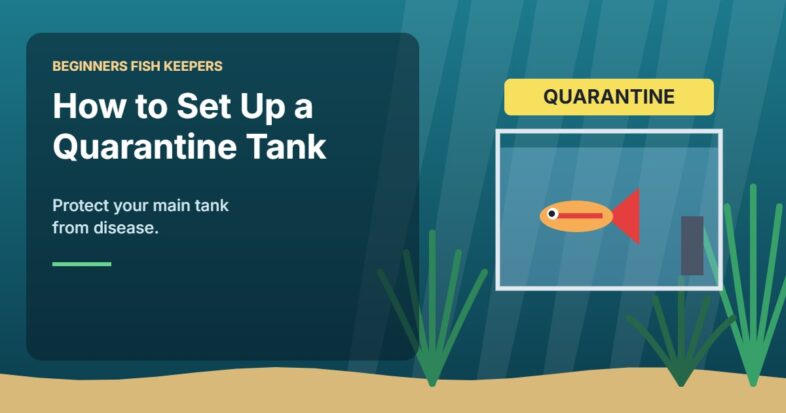
A quarantine tank is a small, separate aquarium where new fish stay for a few weeks before joining your main tank. It is one of the simplest ways to protect your fish from diseases such as ich, velvet, and parasites. It can also double as a hospital tank when a fish gets sick.
Affiliate Disclosure: This page contains affiliate links. If you purchase through these links, I may earn a small commission at no extra cost to you. As an Amazon Associate, I earn from qualifying purchases. This helps support Beginners Fish Keepers and allows me to keep providing free guides for new aquarium and fish keepers. I only recommend products I personally believe in and would use myself. Thank you for your support! Read our full affiliate disclosure.
Why Quarantine New Fish?
- New fish can carry diseases even when they look healthy
- Store tanks often share water, so illness spreads easily
- Treating one small tank is easier and cheaper than treating a large one
- Medications in a separate tank will not harm plants, shrimp, or snails in your main tank
- New fish can rest, eat, and recover from shipping stress without competition
What You Need
- A small tank: a 10 gallon tank works for most small community fish. Use a larger tank for bigger fish
- A heater: an adjustable heater keeps the temperature matched to your main tank
- A sponge filter: a sponge filter with an air pump is gentle, cheap, and easy to clean
- A lid: stressed fish are more likely to jump
- A hiding place: a clean flowerpot, a piece of PVC pipe, or a plastic plant
- A thermometer: a digital thermometer is easy to read
- Separate tools: a net and bucket used only for the quarantine tank, to avoid spreading disease
A bare bottom, with no gravel, makes the tank easy to keep clean and lets you see uneaten food and waste.
How to Set It Up
- Seed the filter. The best quarantine tanks start with beneficial bacteria. Keep a spare sponge filter running in your main tank all the time, then move it into the quarantine tank when you need it. If you cannot, see our guide on how to cycle a fish tank
- Fill with dechlorinated water. Use water conditioner, and fill partly with old water from your main tank if it is healthy
- Match the temperature to your main tank
- Add a hiding place and a lid
- Test the water before adding fish
How Long Should You Quarantine?
Many fish keepers quarantine new fish for about 2 to 4 weeks. Four weeks is a common, cautious choice because some diseases take time to show up. If any fish gets sick, the quarantine period starts again after treatment ends.
What to Watch For
- White spots, fuzzy patches, or a gold dusty coating
- Clamped fins or torn fins
- Rapid breathing or gasping
- Rubbing against objects
- Not eating, or spitting out food
- Swollen body, raised scales, or cloudy eyes
If you see any of these signs, check our fish disease guide for beginners and specific guides such as ich treatment and fin rot treatment.
Caring for Fish in Quarantine
- Feed small amounts and remove uneaten food
- Test the water every few days, especially for ammonia and nitrite
- Do small, frequent water changes with dechlorinated water at the same temperature
- Keep the lights low to reduce stress
- Watch the fish daily and note any changes
Moving Fish to the Main Tank
When the quarantine period is over and the fish look healthy and eat well, move them to your main tank. Use the quarantine net, and do not pour quarantine water into your main aquarium. Follow our fish acclimation guide.
Between Uses
After each use, clean the tank, rinse the decorations, and either break the tank down or keep it running with a seeded sponge filter. If fish in quarantine were sick, disinfect the tank and tools and rinse them thoroughly before using them again.
Final Thoughts
A quarantine tank costs little and can save your whole aquarium from a disease outbreak. Set one up before you buy your next fish, keep a sponge filter seeded in your main tank, and give every new fish a few weeks on its own first.
Have a question about your tank? Ask it in our friendly Facebook group, Beginners Fish Keepers, where new fish keepers help each other every day.