Affiliate Disclosure: As an Amazon Associate, I earn from qualifying purchases. If you buy through links on this page, I may earn a small commission at no extra cost to you.
This beginner fish tank setup guide will show you how to choose the right aquarium, install basic equipment, cycle the tank, and pick beginner-friendly fish.
Setting up your first fish tank can be exciting, but it can also feel overwhelming. The good news is that creating a healthy freshwater aquarium is easier when you follow the right steps.
This beginner fish tank setup guide will walk you through everything you need to know to create a healthy, stable aquarium for your fish.
Step 1: Beginner Fish Tank Setup – Choose the Right Aquarium Size
One of the biggest mistakes beginners make is buying a tank that is too small.
Many people think smaller tanks are easier to care for, but the opposite is usually true. Small tanks can experience rapid changes in water quality, temperature, and chemistry.
For most beginners, a tank between 10 and 20 gallons is a great starting point.
Benefits of a larger beginner aquarium:
- More stable water conditions
- Easier maintenance
- More fish options
- Better filtration
- Less stress on fish
If you want to keep a betta fish, a 5-gallon tank is generally considered the minimum size.
Step 2: Pick a Good Location
Before adding water, choose the right location for your aquarium.
Your tank should be:
- On a sturdy stand
- Away from direct sunlight
- Near an electrical outlet
- Away from heating and cooling vents
- Easy to access for maintenance
Direct sunlight can encourage algae growth and cause temperature fluctuations.
Always verify that the floor and stand can safely support the weight of the aquarium. Remember that water weighs about 8.34 pounds per gallon.
Step 3: Gather Essential Equipment
Every beginner aquarium needs a few basic pieces of equipment.
Aquarium
Choose a quality glass or acrylic aquarium.
Recommended: Tetra 20 Gallon Complete Aquarium Kit – complete 20 gallon starter setup.
Filter
A filter helps remove waste and provides beneficial bacteria a place to grow.
Popular filter types include:
- Hang-on-back filters
- Sponge filters
- Internal filters
- Canister filters
Heater
Most tropical fish require temperatures between 76°F and 80°F.
A reliable adjustable heater is important for maintaining a stable environment.
Recommended: Aqueon Pro Adjustable Aquarium Heater 100W – adjustable heater for a stable temperature.
Thermometer
A simple thermometer helps monitor water temperature.
Lighting
Proper lighting helps you enjoy your fish and can support live plants.
Water Conditioner
Tap water often contains chlorine or chloramine that can harm fish. A quality water conditioner makes tap water safe.
Recommended: Seachem Prime Water Conditioner (500 mL) – concentrated dechlorinator that also detoxifies ammonia.
Step 4: Add Substrate and Decorations
Substrate is the material that covers the bottom of the tank.
Popular choices include:
- Aquarium gravel
- Sand
- Plant substrates
Rinse substrate thoroughly before adding it to the aquarium.
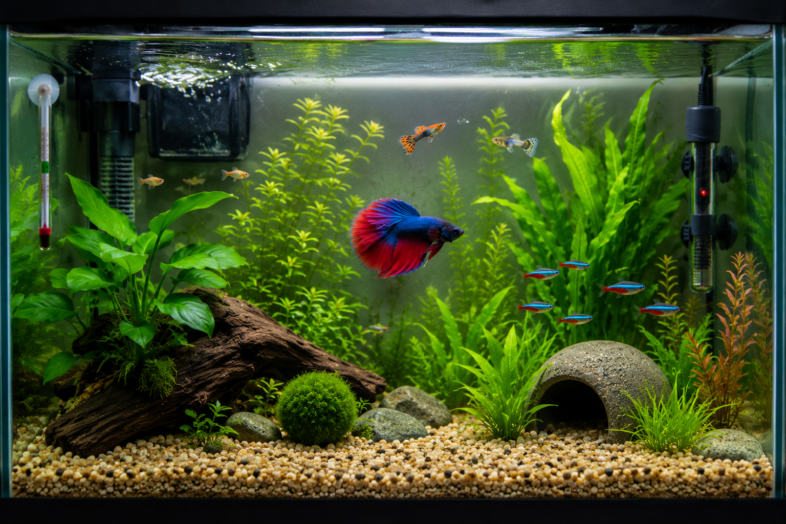
Decorations can include:
- Driftwood
- Rocks
- Artificial plants
- Live plants
- Caves and hiding places
Fish feel more secure when they have places to hide.
Step 5: Fill the Aquarium
Place a plate or bowl on the substrate before pouring water into the tank. This helps prevent disturbing the gravel or sand.
Add water slowly and carefully.
Treat all tap water with a water conditioner according to the product instructions.
Once filled:
- Install the filter
- Install the heater
- Turn on equipment
- Check for leaks
Allow everything to run properly before moving to the next step.
Step 6: Understand the Nitrogen Cycle
The nitrogen cycle is the most important concept in fishkeeping.
Fish produce waste that creates ammonia.
Ammonia is highly toxic to fish.
Beneficial bacteria convert:
Ammonia → Nitrite → Nitrate
This process is known as cycling the aquarium.
A new aquarium does not have enough beneficial bacteria to process fish waste immediately.
Cycling allows these bacteria to establish themselves before the tank becomes heavily stocked.
Skipping this step is one of the most common beginner mistakes.
Step 7: Cycle the Tank Properly
There are several methods for cycling an aquarium.
Recommended: API Freshwater Master Test Kit (800 tests) (read my full review) – accurate liquid tests for ammonia, nitrite, nitrate and pH.
Fishless Cycling
Fishless cycling is generally recommended for beginners.
This method uses an ammonia source without exposing fish to harmful toxins.
Benefits include:
- No fish stress
- No fish losses
- Better control of the process
Cycling typically takes several weeks.
Using a liquid test kit helps track progress; our aquarium water quality guide explains the readings in more detail.
You know the tank is cycled when:
- Ammonia reads 0 ppm
- Nitrite reads 0 ppm
- Nitrate is present
Patience during cycling pays off later.
Step 8: Choose Beginner-Friendly Fish
Not all fish are ideal for beginners.
Some of the best beginner freshwater fish include:
Betta Fish
Beautiful and easy to care for when housed properly.
Corydoras Catfish
Peaceful bottom dwellers that help keep the tank active.
Harlequin Rasboras
Colorful schooling fish with calm personalities.
Platies
Hardy livebearers available in many colors.
Mollies
Active fish that adapt well to a variety of conditions.
Cherry Barbs
Peaceful and beginner-friendly.
Zebra Danios
Hardy fish that tolerate a wide range of conditions.
Research all fish before purchasing to ensure compatibility.
Step 9: Add Fish Slowly
Many beginners make the mistake of adding too many fish at once.
Adding fish slowly helps:
- Protect water quality
- Reduce stress
- Allow beneficial bacteria to adjust
Start with a small number of fish and gradually increase stocking over several weeks.
Observe your fish daily for:
- Normal swimming
- Healthy appetite
- Clear eyes
- Good coloration
Early detection often prevents major problems.
Step 10: Establish a Maintenance Routine
Regular aquarium maintenance keeps an aquarium healthy.
Weekly Tasks
- Test water parameters
- Remove debris
- Clean glass
- Perform partial water changes
Monthly Tasks
- Inspect equipment
- Trim live plants
- Deep clean decorations if needed
Water Changes
Most freshwater aquariums benefit from weekly water changes of approximately 20% to 30%.
Fresh water helps remove nitrates and replenish minerals.
Common Beginner Mistakes to Avoid
Overfeeding
Excess food can pollute the aquarium.
Feed only what fish consume within a few minutes.
Overstocking
Too many fish can quickly create water quality problems.
Skipping Water Tests
Testing helps identify problems before fish show symptoms.
Cleaning Everything at Once
Beneficial bacteria live on filter media and surfaces.
Avoid replacing all filter media at the same time.
Impulse Purchases
Research fish before bringing them home.
Not all fish are compatible.
Recommended Beginner Fish Tank Checklist
Before adding fish, make sure you have:
- Aquarium
- Stand
- Filter
- Heater
- Thermometer
- Water conditioner
- Substrate
- Decorations
- Fish food
- Water test kit
- Net
- Gravel vacuum
Final Thoughts
A successful aquarium begins with patience, planning, and proper setup. By choosing the right tank, cycling it properly, selecting beginner-friendly fish, and maintaining a consistent routine, you’ll greatly increase your chances of success.
Fishkeeping is a rewarding hobby that can provide years of enjoyment. Start slowly, learn as you go, and don’t be afraid to ask questions. Every experienced fishkeeper was once a beginner too.
Welcome to the world of aquarium keeping, and enjoy your new fish tank!