Live Aquarium Plants Guide for beginners starts with understanding that live plants can make a freshwater aquarium healthier, more natural, and more enjoyable to watch.
Affiliate Disclosure: This page contains affiliate links. If you purchase through these links, I may earn a small commission at no extra cost to you. As an Amazon Associate, I earn from qualifying purchases. This helps support Beginners Fish Keepers and allows me to keep providing free guides for new aquarium and fish keepers. I only recommend products I personally believe in and would use myself. Thank you for your support! Read our full affiliate disclosure.
Live aquarium plants do more than make a fish tank look nice. They help use nutrients in the water, provide hiding places for fish and shrimp, give baby fish cover, and create a more natural environment.
This Live Aquarium Plants Guide explains why some plants are very easy even though many beginners expect live plants to be difficult. You do not need a high-tech planted tank, expensive CO2 system, or fancy setup to start. With the right beginner plants, decent lighting, and simple care, live plants can do very well in many freshwater aquariums.
Live Aquarium Plants Guide: Quick Facts
Common Beginner Plants: Java Fern, Anubias, Java Moss, Amazon Sword, Water Sprite, Hornwort, Cryptocoryne
Difficulty: Beginner Friendly, depending on plant type
Minimum Tank Size: Any size aquarium, if lighting and care are suitable
Lighting: Low to medium light for many beginner plants
Substrate: Depends on plant type
Fertilizer: Helpful for many plants, but not always required right away
CO2 Needed: Not required for easy beginner plants
Best For: Freshwater community tanks, shrimp tanks, betta tanks, and natural aquariums
Main Benefits: Better cover, natural look, nutrient use, hiding places, and grazing surfaces
Why Add Live Plants to an Aquarium?
Live plants can help make an aquarium feel more natural. Fish often feel safer when they have plants to swim through, hide behind, or rest near.
Plants are especially helpful for:
Baby fish
Shrimp
Small peaceful fish
Bettas
Shy fish
Community aquariums
Live plants also grow biofilm on their leaves and surfaces. Shrimp, snails, and some small fish may graze on this biofilm.
Plants can also help use nitrate and other nutrients in the aquarium. They do not replace water changes, but they can support better overall tank balance.
Best Beginner Aquarium Plants
Some aquarium plants are much easier than others. Beginners should start with hardy plants that do not need strong light or added CO2.
Good beginner plants include:
Java Fern
Anubias
Java Moss
Amazon Sword
Water Sprite
Hornwort
Cryptocoryne
Vallisneria
Frogbit
Duckweed, if you do not mind fast growth
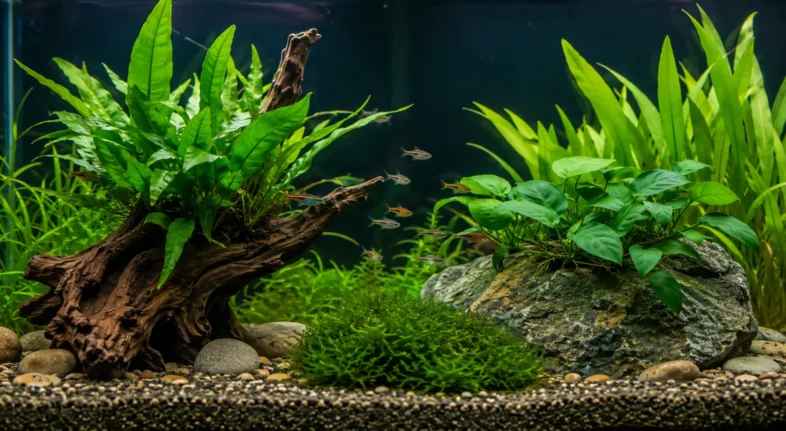
Java fern and Anubias are two of the easiest plants because they do not need to be planted in the substrate. They can be attached to driftwood, rocks, or decorations.
Java moss is great for shrimp and baby fish. It gives tiny animals places to hide and graze.
Amazon swords can grow large and do best with nutrients near the roots.
Do Aquarium Plants Need Special Lighting?
Aquarium plants need light to grow. But beginner plants usually do not need extreme lighting.
Recommended: NICREW ClassicLED Plus Aquarium Light (18-24 in) – affordable LED light for low light plants.
Low to medium aquarium lighting works for many easy plants. Too much light can actually cause algae problems, especially if the tank has too many nutrients.
A simple lighting schedule is usually best for beginners.
A good starting point is:
6 to 8 hours of light per day
If algae becomes a problem, reduce the lighting time. If plants are not growing well, check the light, nutrients, and plant type.
Do Aquarium Plants Need Special Substrate?
Some plants need to be planted in the substrate, while others should not be buried.
Recommended: CaribSea Eco-Complete Planted Aquarium Substrate (20 lb) – nutrient rich substrate for planted tanks.
Root-feeding plants like Amazon swords, crypts, and vallisneria grow roots into the substrate and often benefit from root tabs.
Plants like Java fern and Anubias should not have their rhizome buried. The rhizome is the thick green stem-like part where the leaves and roots grow from. If it is buried, the plant may rot.
Java moss does not need substrate. It can be attached to wood, rocks, or decorations.
Floating plants do not need substrate at all because they float at the surface.
Do Live Plants Need Fertilizer?
Some live plants can survive with nutrients from fish waste, but many plants do better with fertilizer.
Recommended: Seachem Flourish Tabs Root Tabs (40 ct) – root tabs that feed heavy root feeding plants.
There are two common types of aquarium plant fertilizers:
Liquid fertilizer
Root tabs
Liquid fertilizer helps plants that feed from the water column, such as Java fern, Anubias, hornwort, moss, and floating plants.
Root tabs help plants that feed heavily through their roots, such as Amazon swords and crypts.
Start simple. Do not add too much fertilizer at once. Too much fertilizer combined with too much light can lead to algae.
Do Aquarium Plants Need CO2?
Easy beginner plants do not need added CO2. Many plants can grow in a low-tech aquarium without a CO2 system.
CO2 can help plants grow faster, but it also adds more equipment, cost, and things to monitor.
For beginners, it is usually better to start with easy plants that do well without CO2. Once you learn the basics, you can decide later if you want a more advanced planted tank.
How to Plant Aquarium Plants
How you plant depends on the type of plant.
Java fern and Anubias should be tied or glued to driftwood, rocks, or decorations. Do not bury the rhizome.
Amazon swords, crypts, and vallisneria should be planted in the substrate with the crown above the substrate.
Stem plants can usually be pushed gently into the substrate.
Floating plants are simply placed on the water surface.
Moss can be tied or glued to wood, rocks, caves, or decorations.
Always remove plant weights, foam, or rock wool from store-bought plants before adding them to the aquarium, unless the plant is specifically sold ready to use.
Live Plants and Fish Compatibility
Most peaceful community fish do well with live plants. Many fish enjoy the cover and natural feel.
Good fish for planted tanks include:
Bettas
Guppies
Platies
Mollies
Swordtails
Tetras
Rasboras
Corydoras catfish
Otocinclus
Dwarf gouramis
Shrimp
Snails
Some fish may dig up plants, eat plants, or damage delicate leaves.
Fish that may be harder with live plants include:
Goldfish
Large cichlids
Some African cichlids
Oscars
Silver dollars
Large plecos
This does not mean plants are impossible with those fish, but you may need tougher plants or a different setup.
Live Plants and Shrimp
Live plants are excellent for shrimp tanks. Plants provide grazing surfaces, hiding places, and cover for baby shrimp.
Good plants for shrimp include:
Java moss
Subwassertang
Anubias
Java fern
Floating plants
Hornwort
Water sprite
Shrimp love to pick through moss and plant leaves looking for tiny food particles and biofilm.
If you keep shrimp, make sure any plant fertilizer or treatment is shrimp-safe.
Common Live Aquarium Plant Problems
Many beginner plant problems come from poor lighting, lack of nutrients, wrong planting method, or plant melt.
Common plant problems include:
Yellow leaves
Melting leaves
Holes in leaves
Leaves turning brown
Algae on leaves
Plants floating up
Slow growth
Roots not developing
Some plants melt when first added to a new aquarium. This means old leaves die back while the plant adjusts. Crypts are known for this. If the roots are healthy, the plant may grow back.
If leaves turn yellow, the plant may need nutrients. If algae covers the leaves, the tank may have too much light, too many nutrients, or not enough balance.
Common Beginner Mistakes
One common mistake is burying Java fern or Anubias in the gravel. Their rhizome should stay above the substrate.
Another mistake is using too much light. More light does not always mean better plant growth. Too much light often causes algae.
Beginners may also buy plants that are not true aquatic plants. Some plants sold for aquariums are actually houseplants that will slowly rot underwater.
Another mistake is expecting plants to grow perfectly right away. Some plants need time to adjust.
Over-cleaning can also be a problem. A little biofilm and natural growth is normal in planted aquariums.
Are Live Aquarium Plants Good for Beginners?
Yes, live aquarium plants can be great for beginners if the right plants are chosen.
Start with easy plants like Java fern, Anubias, Java moss, hornwort, water sprite, and Amazon sword. Avoid difficult plants at first.
You do not need to make it complicated. Start simple, keep the light schedule steady, do regular water changes, and choose plants that match your setup.
Final Live Aquarium Plants Guide Tips
Live aquarium plants can make a freshwater tank healthier, more natural, and more beautiful. They provide cover for fish, grazing areas for shrimp, and a natural look that many aquarium keepers enjoy.
For beginners, the key is choosing easy plants and keeping the setup simple. You do not need CO2 or expensive equipment to enjoy live plants.
Start with hardy beginner plants, give them steady light, avoid burying rhizomes, and be patient while they adjust. With simple care, live plants can become one of the best parts of your aquarium.
For an unusual beginner-friendly plant, see our Aquarium Banana Plant Care Guide.